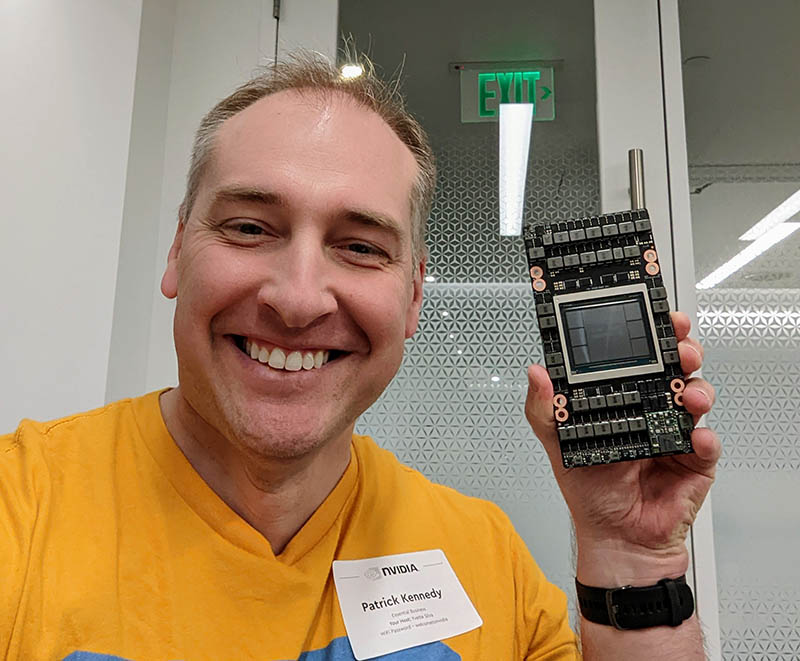
The NVIDIA H100 GPU stands as one of the most significant technological advancements in recent computing history. Built on the revolutionary NVIDIA Hopper architecture, the H100 has become the gold standard for artificial intelligence and high-performance computing workloads worldwide. From powering large language models like ChatGPT to accelerating scientific research, this GPU represents an order-of-magnitude leap over its predecessor, the A100.
This comprehensive guide explores everything you need to know about the NVIDIA H100—from its architecture and technical specifications to real-world applications, pricing, and market positioning.
What is the NVIDIA H100?
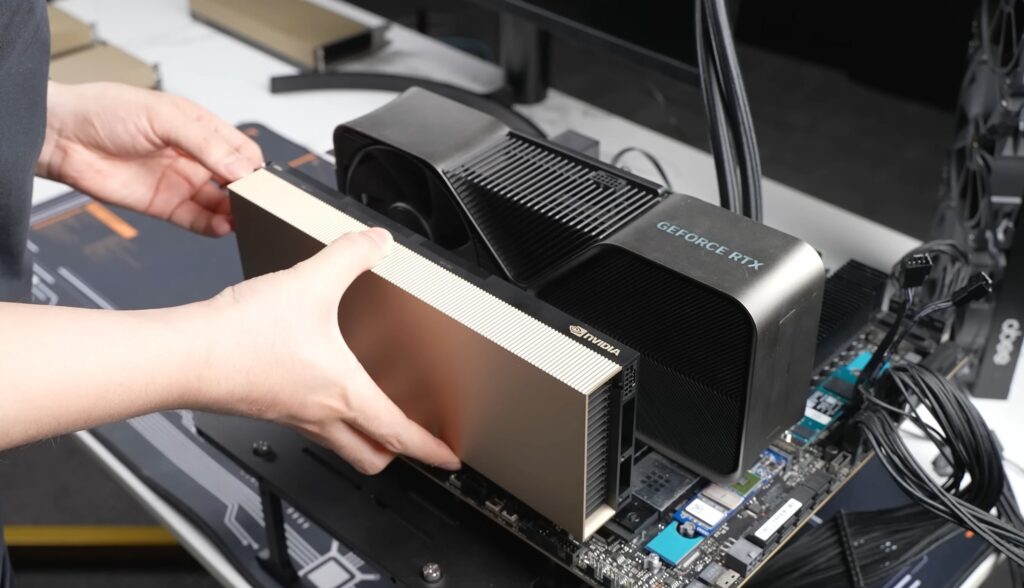
The NVIDIA H100 is a data center GPU designed specifically for accelerated computing. Released as the successor to the massively successful A100, the H100 targets the most demanding computational workloads:
- Artificial Intelligence: Training and deploying large language models (LLMs) with billions or trillions of parameters
- High-Performance Computing (HPC) : Exascale computing for scientific research and simulations
- Data Analytics: Accelerated big data processing and analysis
- Cloud and Enterprise Computing: Scalable infrastructure for modern data centers
The H100 is named after pioneering computer scientist Grace Hopper and represents NVIDIA’s ongoing commitment to pushing the boundaries of what accelerated computing can achieve.
The Hopper Architecture: Engineering Breakthroughs
The H100 is built on NVIDIA’s Hopper architecture, named after Grace Hopper, a computer science pioneer. This architecture introduces several groundbreaking innovations that fundamentally change how GPUs process complex AI workloads.
Fourth-Generation Tensor Cores
At the heart of the Hopper architecture are the fourth-generation Tensor Cores. These specialized processing units are designed specifically for matrix multiplication operations, which form the mathematical foundation of neural networks. The H100’s Tensor Cores deliver unprecedented performance across multiple precision formats, including FP64, TF32, FP32, FP16, INT8, and the newly introduced FP8.
Transformer Engine: A Dedicated AI Processor
Perhaps the most significant innovation in the H100 is its dedicated Transformer Engine. Transformer-based models like GPT-4, Llama, and BERT have revolutionized AI, and NVIDIA built hardware specifically to accelerate them. The Transformer Engine leverages FP8 precision to dramatically speed up large language model training and inference while maintaining accuracy.
This dedicated hardware enables the H100 to process trillion-parameter language models that were previously impossible to handle efficiently.
DPX Instructions for Dynamic Programming
Beyond AI, the H100 introduces new DPX instructions that accelerate dynamic programming algorithms. These are essential for:
- Genomics: Smith-Waterman algorithm for DNA sequence alignment
- Protein folding: Structure prediction for biomedical research
- Path finding: Route optimization and logistics
The DPX instructions deliver up to 7X higher performance than the A100 and an astonishing 40X improvement over traditional CPUs for these algorithms.
Key Technical Specifications
The H100 comes in two primary variants: the H100 SXM (designed for high-density SXM sockets) and the H100 NVL (a PCIe version optimized for mainstream servers).
Compute Performance (with sparsity)
| Precision Format | H100 SXM Performance | H100 NVL Performance | Primary Use Case |
|---|---|---|---|
| FP8 Tensor Core | 3,958 teraFLOPS | 3,341 teraFLOPS | LLM training and inference |
| FP16/BFLOAT16 Tensor Core | 1,979 teraFLOPS | 1,671 teraFLOPS | Deep learning training |
| TF32 Tensor Core | 989 teraFLOPS | 835 teraFLOPS | AI training with FP32 precision |
| FP64 Tensor Core | 67 teraFLOPS | 60 teraFLOPS | High-precision scientific computing |
| FP64 (non-Tensor) | 34 teraFLOPS | 30 teraFLOPS | Traditional HPC workloads |
Memory and Bandwidth
| Specification | H100 SXM | H100 NVL |
|---|---|---|
| GPU Memory | 80GB HBM3 | 94GB HBM3 |
| Memory Bandwidth | 3.35 TB/s | 3.9 TB/s |
| Memory Technology | HBM3 (High Bandwidth Memory 3) | HBM3 |
The 94GB configuration of the H100 NVL is specifically designed for large language model inference, providing enough memory to handle models like Llama 2 70B efficiently.
Physical Specifications
| Specification | H100 SXM | H100 NVL |
|---|---|---|
| Form Factor | SXM socket module | PCIe dual-slot air-cooled |
| Max TDP | Up to 700W (configurable) | 350-400W (configurable) |
| Interconnect (GPU to GPU) | 900 GB/s NVLink | 600 GB/s NVLink |
| Interconnect (PCIe) | 128 GB/s PCIe Gen5 | 128 GB/s PCIe Gen5 |
| Multi-Instance GPU (MIG) | Up to 7 instances @ 10GB each | Up to 7 instances @ 12GB each |
| Decoders | 7 NVDEC, 7 JPEG | 7 NVDEC, 7 JPEG |
Server Configurations
The H100 SXM is typically deployed in:
- NVIDIA DGX H100: A turnkey system with 8 H100 GPUs delivering 32 petaflops of FP8 compute performance
- NVIDIA HGX H100: Partner systems with 4 or 8 GPUs
- NVIDIA-Certified Systems: Validated servers from partners like Dell, HPE, and Supermicro
The H100 NVL is available in partner systems with 1 to 8 GPUs, offering flexibility for various deployment scales.
Performance: The Numbers That Matter
AI Training: Up to 4X Faster
For training large language models like GPT-3 (175 billion parameters), the H100 delivers up to 4X faster training performance compared to the A100. This dramatic improvement comes from several factors working together:
- The Transformer Engine with FP8 precision
- Fourth-generation NVLink providing 900 GB/s GPU-to-GPU interconnect
- NDR Quantum-2 InfiniBand networking
- PCIe Gen5 host interface
AI Inference: Up to 30X Faster
Perhaps even more impressive is the H100’s inference performance. On the largest models, such as a 530-billion-parameter Megatron chatbot, the H100 achieves up to 30X higher inference performance than the A100. This makes real-time conversational AI practical at unprecedented scales.
HPC Performance: Up to 7X Faster
For high-performance computing applications, the H100 delivers up to 7X higher performance than the A100 on critical workloads like:
- 3D FFT (Fast Fourier Transform) for signal processing and simulations
- Smith-Waterman genome sequencing algorithms
Performance Comparison: H100 vs. A100
| Metric | H100 vs. A100 Improvement |
|---|---|
| LLM Training (GPT-3 175B) | Up to 4X faster |
| LLM Inference (Megatron 530B) | Up to 30X faster |
| HPC (3D FFT) | Up to 7X faster |
| Dynamic Programming (DPX) | 7X higher, 40X vs. CPU |
| FP64 Tensor Core Compute | 3X (60 vs. 19.5 teraFLOPS) |
| Memory Bandwidth | ~2X (3.35 vs. 1.6 TB/s) |
Real-World Implementation: Scotland’s First DGX H100
The University of Strathclyde’s CMAC research center installed the first DGX H100 supercomputer in a UK university in 2025. This system uses the H100’s capabilities to:
- Develop AI for medicines manufacturing
- Create ChatGPT-like language models for pharmaceutical applications
- Run real-time imaging on advanced manufacturing process lines
- Enable autonomous robotic platforms driven by hybrid AI and physics-based models
Professor Blair Johnston, associate director of CMAC, noted that the DGX H100 would “allow us to advance research challenges previously beyond accessible computational capabilities”.
Advanced Features and Capabilities
Multi-Instance GPU (MIG)
The H100 supports Multi-Instance GPU (MIG) technology, which allows a single H100 GPU to be partitioned into up to 7 separate GPU instances. Each instance operates independently with its own memory, cache, and compute cores. This enables:
- Better utilization of GPU resources across multiple workloads
- Isolation for multi-tenant environments
- Right-sizing compute resources for specific applications
For the H100 NVL, each MIG instance can be configured with 12GB of memory, while the SXM version supports 10GB per instance.
NVIDIA Confidential Computing
The H100 is the world’s first GPU-accelerator with built-in confidential computing capabilities. This security feature creates a hardware-based Trusted Execution Environment (TEE) that:
- Secures and isolates entire workloads
- Protects the confidentiality and integrity of data and applications in use
- Enables secure multi-party computing and federated learning
This is crucial for government agencies, financial institutions, and healthcare organizations handling sensitive data.
NVLink and NVSwitch Interconnects
The H100 features fourth-generation NVLink technology providing:
- 900 GB/s bidirectional GPU-to-GPU bandwidth for SXM configurations
- 600 GB/s for PCIe-based NVL configurations
- Low-latency communication essential for large-scale AI training clusters
Combined with NVIDIA NVSwitch, this interconnect enables all GPUs in a system to communicate simultaneously at full bandwidth, effectively creating a single, massive GPU.
NVIDIA Magnum IO Software Stack
The H100 is complemented by NVIDIA Magnum IO software, which optimizes data movement and storage access across the entire system. This includes:
- GPU-accelerated networking stacks
- Storage access optimization
- IO management for large-scale clusters
The H100 NVL: Specialized for Large Language Models
The H100 NVL variant deserves special attention. This PCIe-based GPU is specifically optimized for large language model inference.
Key NVL Specifications
- 188GB total HBM3 memory (across two linked GPUs via NVLink bridge)
- 3.9 TB/s memory bandwidth
- Up to 5X performance improvement over A100 on Llama 2 70B inference
- 350-400W TDP (more power-efficient than SXM)
- Includes NVIDIA AI Enterprise subscription (5 years)
The H100 NVL is designed to bring LLM capabilities to mainstream data centers by working within standard PCIe server constraints. It’s the ideal solution for organizations looking to deploy production-ready generative AI without building massive custom systems.
NVIDIA AI Enterprise Included
Unlike the SXM variant, the H100 NVL comes bundled with a five-year NVIDIA AI Enterprise subscription. This enterprise software suite includes:
- NVIDIA NIM: Easy-to-use microservices for generative AI deployment
- Enterprise-grade security, manageability, and support
- Performance-optimized AI solutions for computer vision, speech AI, RAG, and more
This bundling significantly reduces the total cost of ownership for enterprise AI deployments.
Market Pricing and Availability
Hardware Costs
The H100 is a premium product with pricing reflecting its capabilities. Current retail pricing from major distributors:
These prices are for individual GPU cards from distributors like CDW. Bulk purchases for data center deployments typically receive volume discounts.
Cloud Instance Pricing
For organizations not ready to purchase hardware, cloud providers offer H100 instances:
| Provider | Hourly Rate (May 2026) |
|---|---|
| Typical market rate | 2.95−6.00 per GPU hour |
| Neysa (fractional access) | From $0.79 per hour |
| H200 (for comparison) | 3.50−7.00 per GPU hour (30-50% more) |
The H200, while more powerful, commands a significant premium over the H100. This pricing difference is a major reason the H100 remains popular even after the H200’s release.
Why the H100 Remains Popular
Despite newer chips like the H200 and B100 being available, the H100 continues to dominate the market. According to industry analysis, this is because:
- Cost/performance sweet spot: The H200 costs 30-50% more but doesn’t provide proportional benefits for all workloads
- Proven reliability: The H100 has been extensively validated across thousands of deployments
- Software maturity: The software ecosystem around H100 is fully mature
- Availability: The H100 has achieved mass production scale
The article summarizes: “*It’s not the most powerful chip that Nvidia has. It’s not even the runner-up anymore. But in the Hopper class, the H100 is still king.*”
Use Cases and Applications
Large Language Model Training
The H100’s Transformer Engine and massive compute capabilities make it ideal for training foundation models. Companies like OpenAI, Anthropic, Meta, and Google use H100 clusters to train their most advanced models.
LLM Inference and Deployment
The H100 NVL variant excels at running production LLMs, delivering up to 5X the performance of A100 systems for models like Llama 2 70B. This enables real-time conversational AI at scale.
Scientific Research and HPC
The H100 accelerates research in:
- Drug discovery: Molecular dynamics simulations and protein folding
- Climate modeling: Complex atmospheric and ocean simulations
- Astrophysics: Simulation of cosmic phenomena
- Genomics: DNA sequencing and analysis
The DPX instructions provide dramatic speedups for bioinformatics workloads.
Government and Secure Computing
The H100’s confidential computing capabilities make it suitable for classified and sensitive government workloads. MetroStar, for example, uses H100 GPUs to fine-tune AI models on sensitive datasets in secure enclaves for U.S. government agencies.
Data Analytics
Accelerated data analytics using GPU-optimized Spark 3.0 and NVIDIA RAPIDS enables processing of massive datasets that would be impractical with CPU-only systems.
Competitive Landscape: H100 vs. Other GPUs
Within the NVIDIA Family
| GPU | Architecture | Key Advantage | Best For |
|---|---|---|---|
| H100 | Hopper | Cost/performance sweet spot | General AI/HPC |
| H200 | Hopper | 141GB HBM3e memory | Memory-intensive LLMs |
| B100 | Blackwell | 1.8 PFLOPS FP4 | Next-gen AI training |
| A100 | Ampere | Still capable, lower cost | Budget-conscious deployments |
| L40S | Ada | 48GB, 300W | Cloud gaming, 3D rendering |
The H100’s position is unique: it offers 80-94GB of HBM3 memory with excellent performance at a price point that’s accessible for many organizations, while the H200 commands a 30-50% premium for its enhanced memory subsystem.
Export Controls and Geopolitical Considerations
The H100 has become entangled in U.S.-China trade tensions. As of early 2026, the regulatory situation is complex:
Current Export Status
- H100: Restricted from export to China
- H200: Eligible for case-by-case review
- H800: Chinese-market variant with reduced NVLink bandwidth (600GB/s vs. 900GB/s)
This unusual situation—allowing the more powerful H200 but restricting the H100—appears to be a strategic move. According to analysts, “*The H200 carve-out is almost certainly a negotiating chip — visible enough to signal goodwill, limited enough to not hand over frontier compute.*”
Organizations in restricted regions should investigate the H800 variant, which was specifically designed to comply with export controls.
Getting Started with H100
Hardware Requirements
Deploying H100 GPUs requires appropriate infrastructure:
- Power: 700W per SXM GPU requires robust power delivery
- Cooling: Data center-grade cooling solutions
- Networking: High-speed interconnects (NDR InfiniBand recommended)
- Physical space: Standard data center racks for SXM; PCIe slots for NVL
Software Ecosystem
The H100 is supported by NVIDIA’s comprehensive software stack:
- CUDA: The core parallel computing platform
- NVIDIA AI Enterprise: Production-ready AI software (included with NVL)
- NVIDIA Magnum IO: Optimized data movement
- NGC Catalog: Containerized AI/ML software
Training and Support
Given the complexity of large-scale GPU deployments, NVIDIA and its partners offer:
- Professional services for deployment planning
- Training programs for data center teams
- Enterprise support contracts
Organizations new to GPU-accelerated computing should consider starting with cloud instances before committing to hardware purchases.
Future Outlook
The H100 represents a mature, proven platform that will likely remain relevant for years despite newer options. Factors supporting continued H100 adoption:
- Proven track record: Millions of H100 GPUs have been deployed globally
- Software optimization: The software stack is highly mature and optimized
- Cost effectiveness: Superior price/performance for many workloads
- Availability: Mass production has made H100 accessible
While the H200 and B100 will eventually supersede the H100, the pace of AI development means demand for all high-performance GPUs will likely remain strong. The market analysis suggests: “It’s still a rapid-paced, volatile and often chaotic market… nations and companies scramble to take advantage of the great power in the products of the leading microchip market-maker.“
The NVIDIA H100 GPU represents a monumental achievement in accelerated computing. From its Transformer Engine optimized for large language models to its DPX instructions for genomic research, every aspect of the H100 is designed to push the boundaries of what’s computationally possible.
For organizations building AI infrastructure, the H100 offers a proven, powerful platform that delivers order-of-magnitude improvements over previous generations. Whether purchased as individual GPUs for specialized workloads, deployed as part of DGX systems for turnkey AI supercomputing, or accessed through cloud providers for flexible scaling, the H100 provides the computational foundation for the AI revolution.
As newer chips like the H200 and B100 emerge, the H100’s combination of performance, maturity, and cost-effectiveness ensures it will remain a cornerstone of data center computing for years to come.